AI & Career Impact: Adapt, Lead, or Be Replaced?
AI & Career Impact: Adapt, Lead, or Be Replaced?
Artificial Intelligence is no longer a futuristic concept—it’s a present-day reality reshaping industries, redefining job roles, and rewriting career paths. From automated customer support to AI-driven analytics and decision-making, the question is no longer if AI will impact your career, but how deeply. In this new era, professionals face a critical choice: adapt, lead, or risk being replaced.
How AI Is Changing the Career Landscape
AI is transforming work in three major ways:
1. Automation of Repetitive Tasks
Routine and rule-based tasks are the first to be automated. Data entry, attendance tracking, basic accounting, and customer queries are increasingly handled by AI-powered systems—faster, cheaper, and with fewer errors.
2. Augmentation, Not Just Replacement
AI doesn’t only replace jobs; it enhances human capability. Professionals who use AI tools can analyze data faster, make smarter decisions, and focus on creativity and strategy instead of manual work.
3. Creation of New Roles
Every major technological shift creates new opportunities. AI has already given rise to roles like AI trainers, prompt engineers, data analysts, automation architects, and ethical AI specialists.
Adapt: The Minimum Requirement to Survive
Adaptation is no longer optional—it’s the baseline.
To adapt, professionals must:
- Learn how AI tools work in their domain
- Embrace automation instead of resisting it
- Continuously upgrade skills
For example, HR professionals who understand AI-based attendance and performance analytics become more valuable than those relying solely on manual registers and spreadsheets.
Adaptation keeps you relevant—but it doesn’t make you a leader.
Lead: Turn AI Into Your Competitive Advantage
Leaders don’t fear AI—they leverage it.
To lead in the AI era:
- Use AI to improve decision-making, not just efficiency
- Combine human judgment with machine intelligence
- Drive digital transformation within teams and organizations
Professionals who lead AI adoption become problem-solvers, innovators, and strategic thinkers. They are the ones shaping workflows, not just following them.
Leadership in AI isn’t about coding—it’s about vision, execution, and impact.
Be Replaced: The Cost of Ignoring Change
Those who ignore AI often assume experience alone will protect them. History shows otherwise.
Careers are most at risk when professionals:
- Rely entirely on manual processes
- Avoid learning new tools
- Resist change due to comfort or fear
AI doesn’t replace people—it replaces inefficiency, rigidity, and outdated skills. Organizations prioritize speed, accuracy, and insights, and AI delivers all three.
Human Skills AI Cannot Replace
While AI is powerful, it still lacks core human strengths:
- Critical thinking
- Emotional intelligence
- Creativity
- Ethical judgment
- Leadership and communication
The future belongs to professionals who combine human intelligence with artificial intelligence.
The Future of Careers: Collaboration, Not Competition
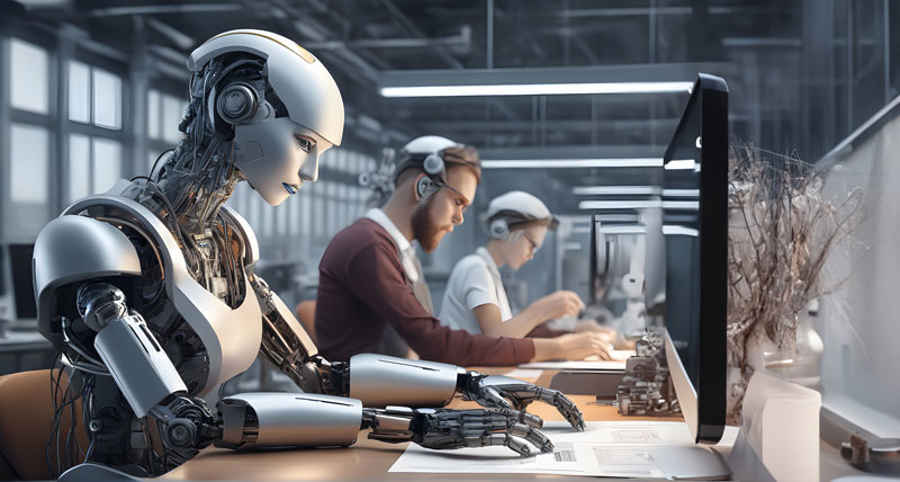
The smartest approach is not to compete with AI, but to collaborate with it. Careers of the future will reward those who can:
- Ask better questions
- Interpret AI-generated insights
- Make responsible, human-centered decisions
AI is a tool. Your mindset determines whether it becomes a threat or a growth multiplier.
Final Thought
AI is changing the rules of the game. Standing still is no longer safe.
You have three choices:
- Adapt to stay relevant
- Lead to stay ahead
- Or be replaced by those who do
The future of your career isn’t decided by AI—it’s decided by how you respond to it.